La Bourse  /  Volume II

Volume II of VII

Foundations — The Paradigm and the Science

Volume I asked what you do on Monday.

A watercolour of a woman's face merging into trees, a house and hills.
Volume II11 chapters, each with its whole teaching unit, and 3 extensions: one for the practitioner, one for the corporation, one for the translation between them.

The chapters

A watercolour of a river winding through autumn trees, two small figures walking its bank toward a low sun.
Plate II.01Two Bowls, One Spring.The spring is not scarce. The bowl is. Almost everything this volume argues is contained in the difference between those two sentences.

Nº II.01

From Scarcity to Abundance

Volume I asked what you do on Monday.

A woman in linen standing at a tall window, looking out, morning light laid across the wall beside her.
Plate II.02The Slate, Before Opening.No equilibrium was computed here. A price was made by somebody who knew things, and it will be made again at eleven, and again if the weather turns.

Nº II.02

Markets as Living Systems

You have been told that the economy tends toward equilibrium, and you may have noticed that nothing you have ever worked inside behaves that way.

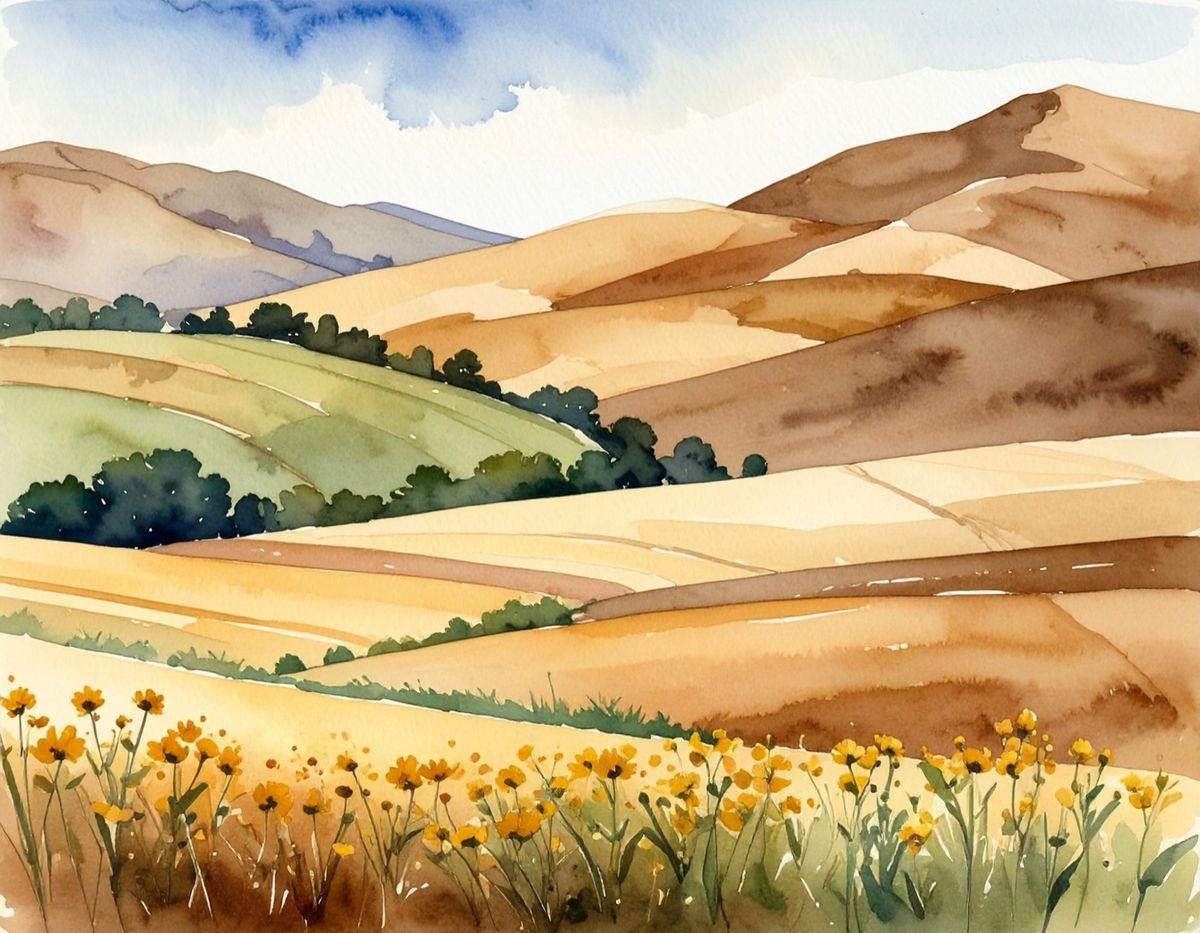
A watercolour of golden hills crossed by field lines, sunflowers in the foreground under a wide sky.
Plate II.03The Line Somebody Drew.The boundary is not in the landscape. It is in the drawing. And somebody downstream of this pen is already being paid by where it lands.

Nº II.03

Non-Dual Economics

There is a lineage behind this chapter and it is better to name it in the first paragraph than to have it discovered in the fourth.

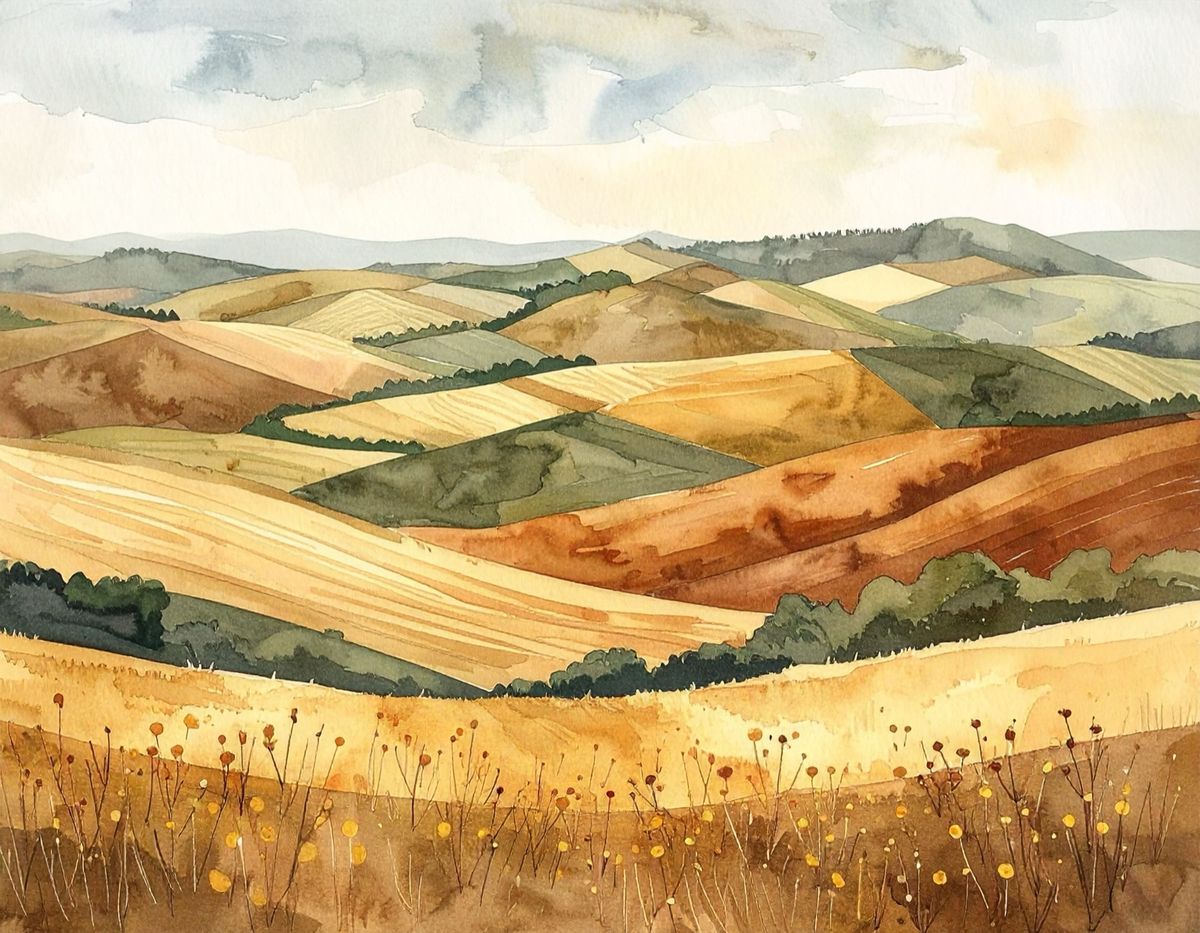
A watercolour of rolling farmland in ochre and green, the hills repeating into the distance like a wave.
Plate II.04The Standing Wave.The pattern is not in the water and it is not in the flame. It is in the difference between them, and it will hold exactly as long as the difference does.

Nº II.04

The Science of Wholeness

There is a sentence that appears in almost every book on regenerative economics, including books this house admires: the economy is a living system.

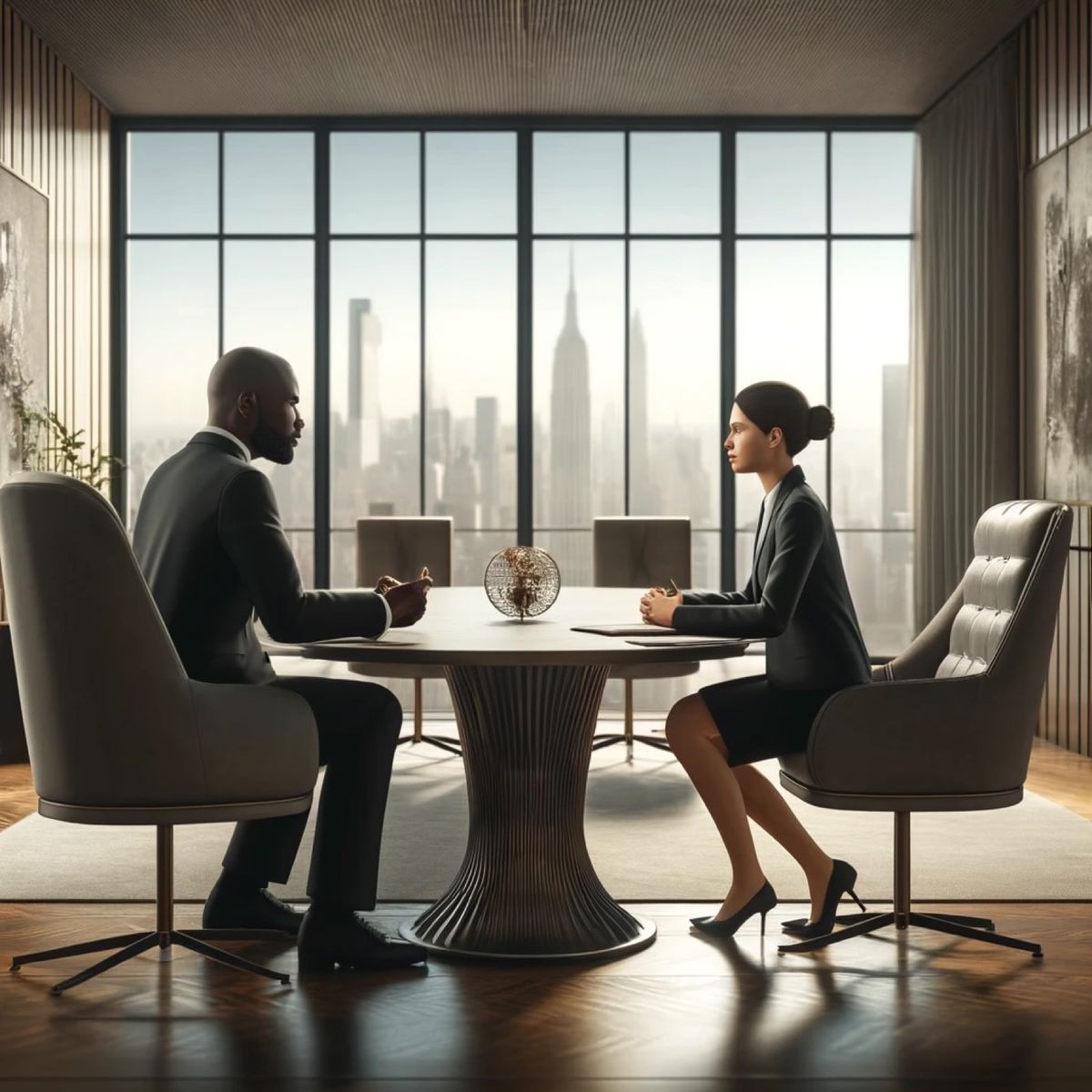
A man and a woman seated across a round table in a high office, the city pale behind the glass.
Plate II.05The Exchange, After Hours.The board is not the calls. The board is which calls are possible. Every economy has one, almost nobody has drawn it, and the drawing changes what you think you are looking at.

Nº II.05

Complexity and Economic Networks

You have been taught to think about firms, and prices, and quantities.

A woman walking away along a path through a glasshouse of palms, sunlight breaking through the canopy ahead of her.
Plate II.06The Glasshouse Behind the Turbine Hall.The turbine took the work out of the steam. The glasshouse is what was left, and what was left is warm, and warmth is not nothing.

Nº II.06

Thermodynamics and Economic Flow

There is a sentence that people who have read a little physics like to say at dinner, and it is: the economy is subject to the second law of thermodynamics.

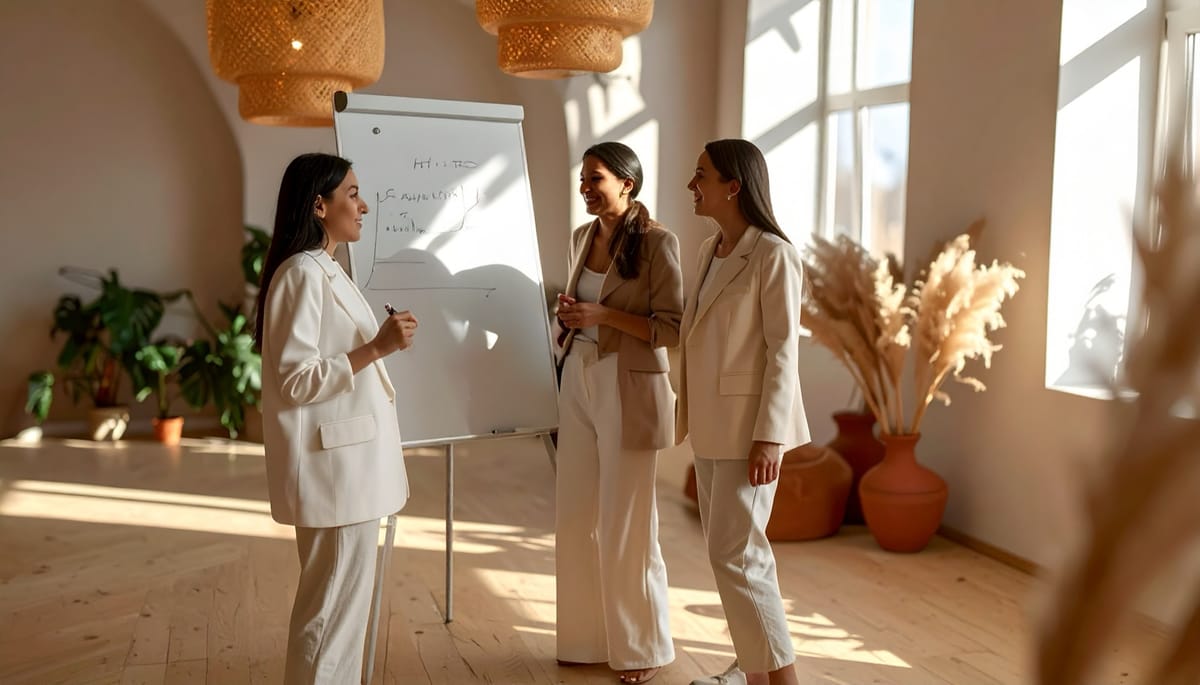
Three colleagues at a whiteboard in a sunlit room, one writing while the others listen.
Plate II.07One Number on a Chalkboard.All of that reaches the next person as one number. The chalk is not a summary of what she knows. It is the only part of it that can be transmitted.

Nº II.07

Information, Signal, and Price

Somewhere in the next hour you will look at a price and make a decision.

A woman and a man seated across from each other in a bright open office, mid-conversation, plants beside them.
Plate II.08The Handshake, and the Ledger Behind It.The handshake is not the opposite of the contract. It is a contract whose enforcement was paid for in advance, over years, by people who are not in the room.

Nº II.08

Networks, Trust, and Topology

You already know that trust is worth money.

A watercolour of an open book with a garden growing out of its pages: succulents, a flowering stem and new leaves.
Plate II.09The Nursery Bed.Every row in this plot is a guess. The plot is not the guess. The plot is the apparatus that lets a guess be wrong cheaply, and lets a right one be carried into next year by somebody who was not here.

Nº II.09

Evolution and Economic Selection

Economics borrowed the word evolution early and has been careless with it ever since.

A man in a dark suit writing in a ledger beside printed charts, a library of books behind him.
Plate II.10The Weight and the Weighing.The balance does not describe the cloth. It describes the cloth in the one respect somebody decided to care about, and then the ledger forgets that a decision was made.

Nº II.10

Measurement and What It Does

There is a particular kind of quiet that falls over a meeting when somebody produces a number.

A woman reading in a lounge chair beside a tall window, plants around her and sun on the floor.
Plate II.11The Marginal Hand.A book that cannot be argued with in the margin is not a book. It is an announcement. The margin is where a text becomes usable, and a text that leaves no room in it has told you what it thinks of you.

Nº II.11

The Case Against This Book

This chapter closes Volume II, and it is the one you should read first if you intend to teach from this edition.

The extensions

Three chapters that make the volume usable by practitioners of Luminous Economics and by people inside corporations alike — because they are not different economies, only different vocabularies.

Hands holding an open book on a lap of white linen, the margin turned to the light from the side.
Plate II.E1The Margin, in Pencil.She is not deciding whether she agrees. She is deciding which sentences she would be willing to defend in a room where somebody has read the source.

Nº II.E1 · extension

For the Practitioner of Luminous Economics

You have read eleven chapters of evidence and you are about to do something with them.

A man standing at the end of a long boardroom table, the board seated and listening, daylight through the glass wall.
Plate II.E2The Board Table, Ten Minutes Early.She is not rehearsing the argument. She is finding the sentence that will be attacked, so that she is the one who says it first.

Nº II.E2 · extension

For the Corporation

You are not being asked whether this is true.

A woman writing at a small desk beside a pot of tea and a lotus, warm lights out of focus behind her.
Plate II.E3Two Columns, One Ledger.Neither document is a translation of the other. There is a set of rows where they describe the same thing, and a longer set where each holds something the other has no word for at all.


Nº II.E3 · extension

The Translation — One Economy, Two Vocabularies

There are two vocabularies in the room and everybody knows it.